18 August 2026 · 6 minute read
Camping in Joshua Tree in an RV
The park runs dry, the heat is real, and half the sites are too short for a big trailer. Here is what to sort out before you leave Hemet.
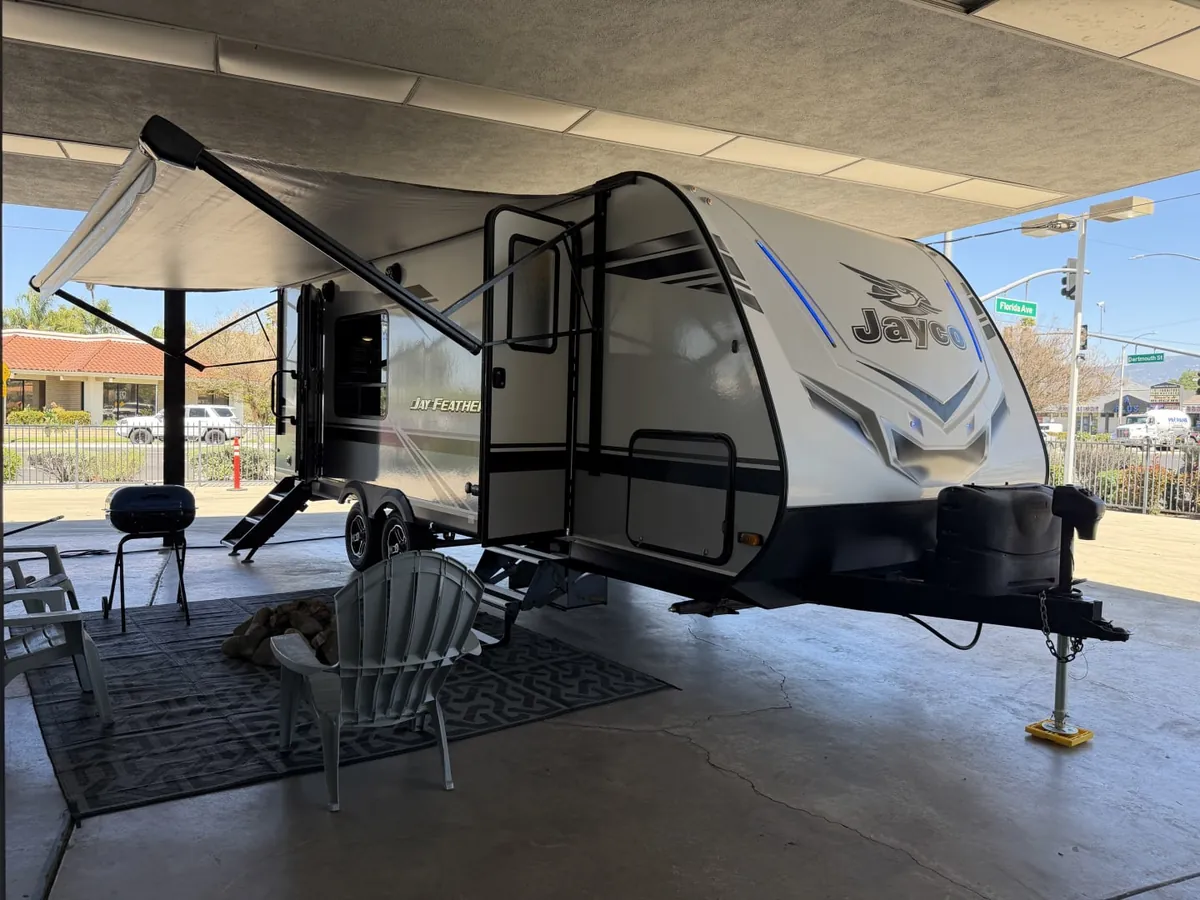
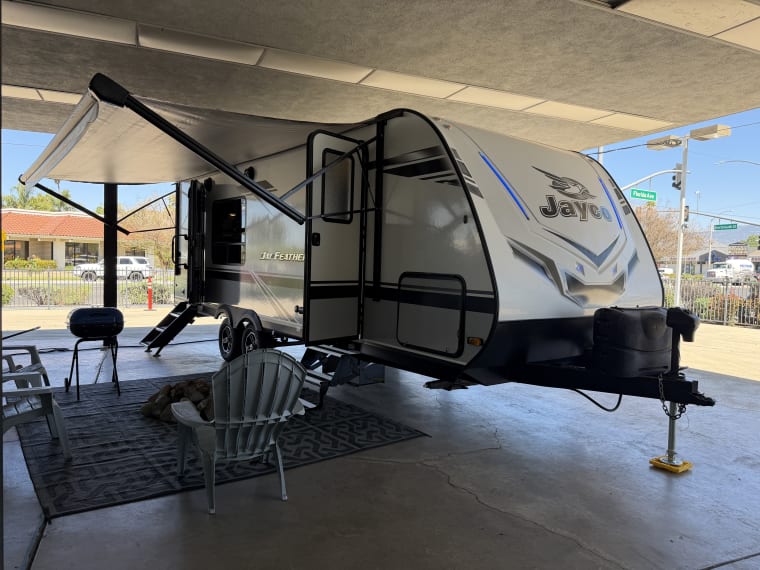
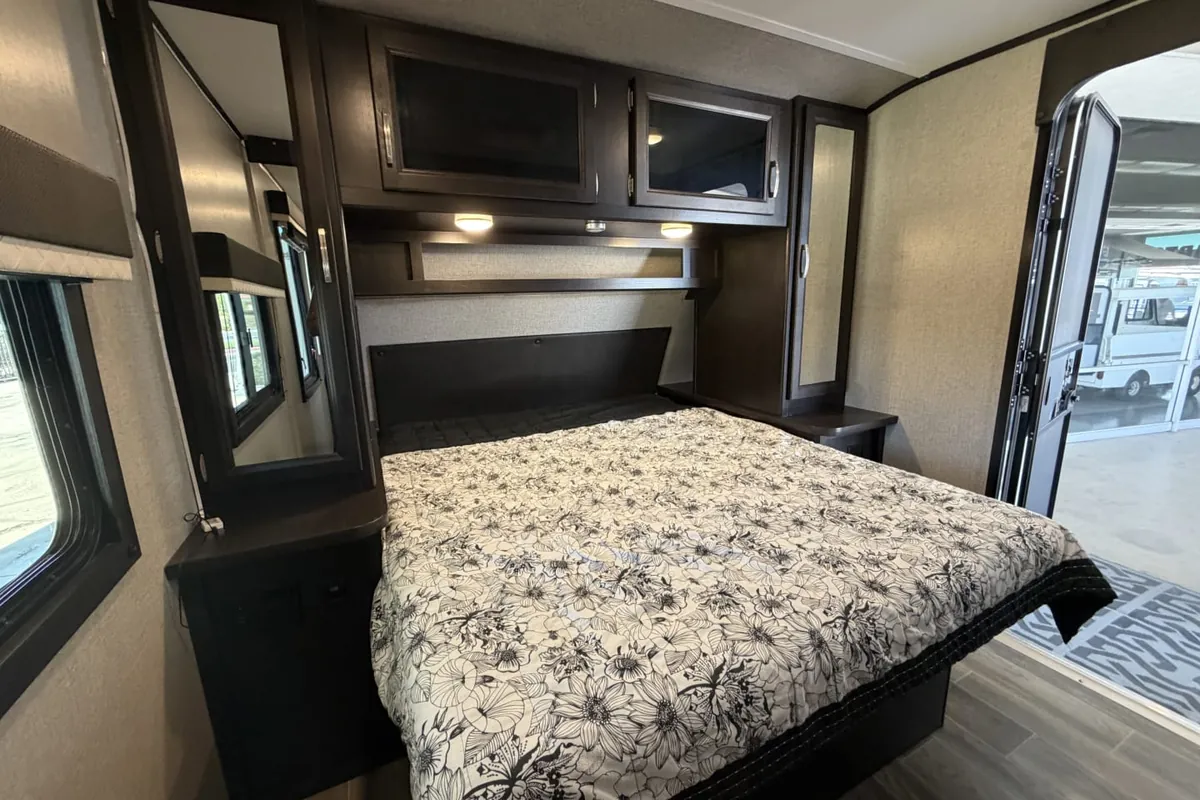
Our 2021 Jayco Jay Feather, set up at the yard the way it arrives at your site.
The drive from our yard
Joshua Tree is 78 miles from the Hemet yard and takes about an hour and a half. You run out through Banning and pick up Highway 62, which climbs hard for the first few miles out of the pass.
That climb is the only part worth thinking about. A loaded trailer behind a half ton truck will feel it. Drop a gear, let the traffic go, and take it steady. Coming home you do the same in reverse, so use the engine to slow you rather than the brakes.
The park has no hookups
This is the thing people get wrong. Every campground inside the park is dry. No water at the site, no power, no sewer, and no dump station inside the boundary. You bring water in and you carry waste out.
A 40 gallon fresh tank is about three days for two people who are careful, and less than two if anybody wants a proper shower. Fill up before you turn off the highway. There is water at the visitor centres but not at the sites.
- Fill fresh water before you enter the park
- Empty both waste tanks before you arrive
- Bring more drinking water than you think you need
- Find the nearest dump station before you go, not after
If you want hookups, stay outside
The private parks in Twentynine Palms and Joshua Tree town have full hookups and paved pads. You give up the quiet and the rock but you get a shower and air conditioning that runs all night.
Plenty of people split it. Two nights inside the park, one night outside to dump, fill and wash. That works well in spring.
Which campgrounds take an RV
Not all of them do, and the ones that do have limits that are stricter than they look on a map.
- Jumbo Rocks is the one everybody wants. The sites are tucked into boulders and the turns are tight. Treat 25 feet as the safe ceiling
- Black Rock has the largest sites, water at the campground and a dump station. It is the easiest first visit
- Indian Cove sits outside the main park road in its own canyon. Big rock walls and no through route
- The private parks outside the boundary are where a fifth wheel belongs
When to go
October through April. June through August runs past a hundred most afternoons and an RV with no shore power cannot hold air conditioning on batteries alone.
Winter nights are the surprise. It can sit near freezing after dark in January while the same day hit seventy. Bring the furnace up before bed and keep the propane topped.
Two things that catch people out
Cell signal drops inside the park and does not come back until you are near the exits. Download your maps at home and screenshot the site number on your booking.
The other one is generator hours. The park limits when you can run one, so a quiet solar setup gets you more of the day than a loud generator does.
What we send out there
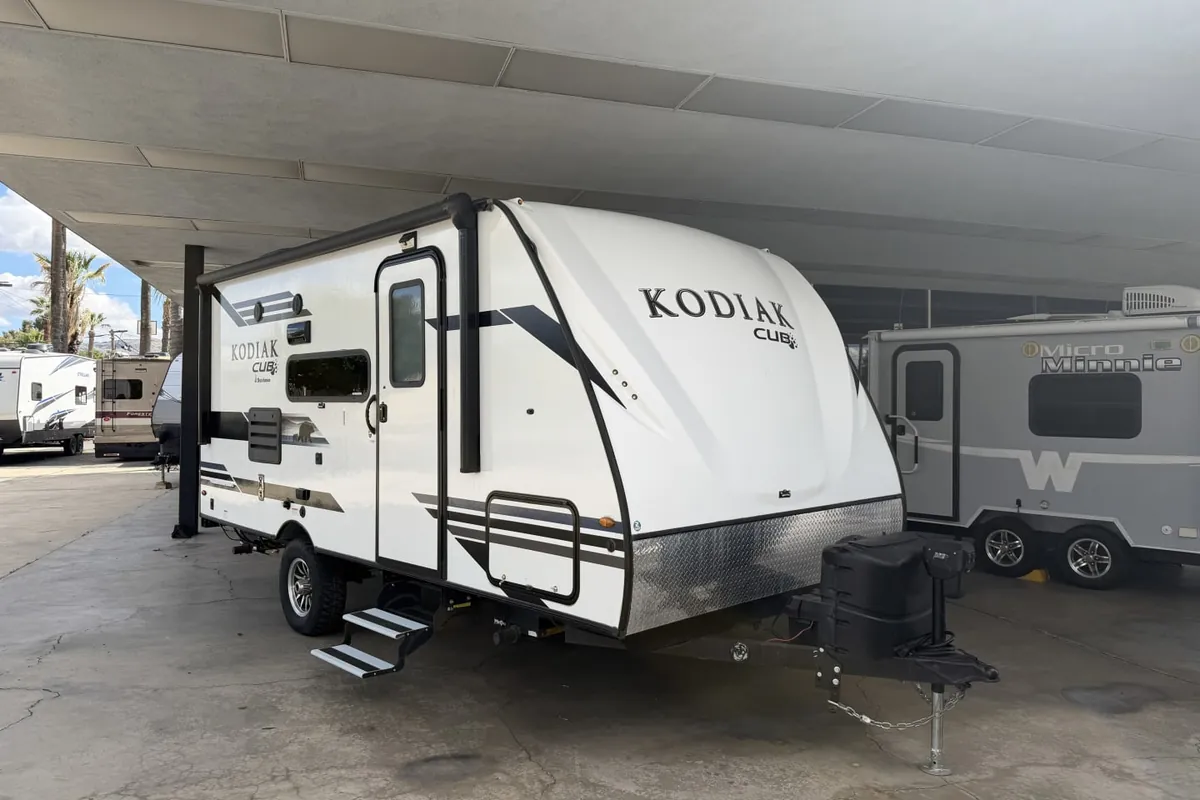
Smaller trailers for the park itself, because the sites are short and the turns are tight. If you want the big fifth wheel, book one of the private parks outside and we will deliver it there.
Park bookings open six months ahead on the federal reservation site and spring weekends go the day they open. Get the campsite first and then come back to us for the RV.
Written by the WeRV yard in Hemet. Call or text (951) 289-0755 if you want a second opinion on a site before you book it.